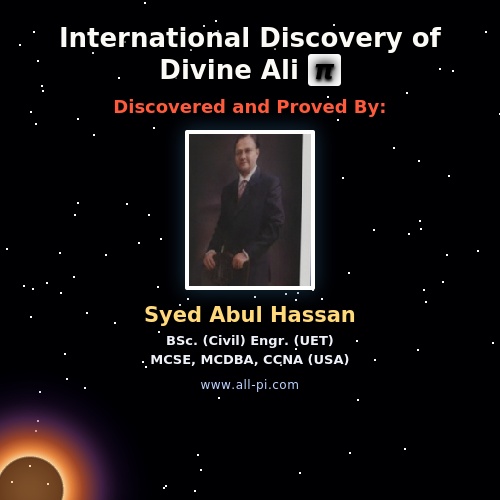
DIVINE ALI PI
Ali π is more than a mathematical constant—it is a symbol of divine harmony. Discovered by Syed Abul Hassan, it bridges pure mathematics with sacred philosophy. The circle, central to this concept, has long represented unity, eternity, and protection. Ancient cultures built round homes, danced in circles, and worshipped in circular spaces. From Stonehenge to the Hindu Chakra, circularity echoed spiritual balance. The feminine energy of the circle contrasts with the masculine line of the diameter. Ali π draws from this duality to explore deeper truths about creation and order. The full moon, marked in ancient calendars, reflects the rhythm of nineteen. Bahá’í teachings embrace cycles of nineteen, revealing cosmic structure and time. Buddhism sees six as the number of transcendent virtues guiding human growth. Chinese traditions link nineteen-year cycles to fate and renewal. Hinduism describes God as a circle with no circumference, center everywhere. The Vedas speak of six divine attributes, each expressing cosmic power and grace. Greek philosophers saw six as harmony, truth, and health—echoes of divine design. The Rig Veda’s 114 hymns and the Gospel of Thomas’s 114 sayings mirror sacred math. Christian scholars connect grace to the number 114, revealing hidden numerical wisdom. Ali π unites these traditions, showing how numbers reflect spiritual realities. It invites us to see mathematics not as cold logic, but as a language of the divine. Through Ali π, the circle becomes a portal to understanding eternity and unity.